
Why Do My Investments Go Down? A Chill Guide to Market Dips
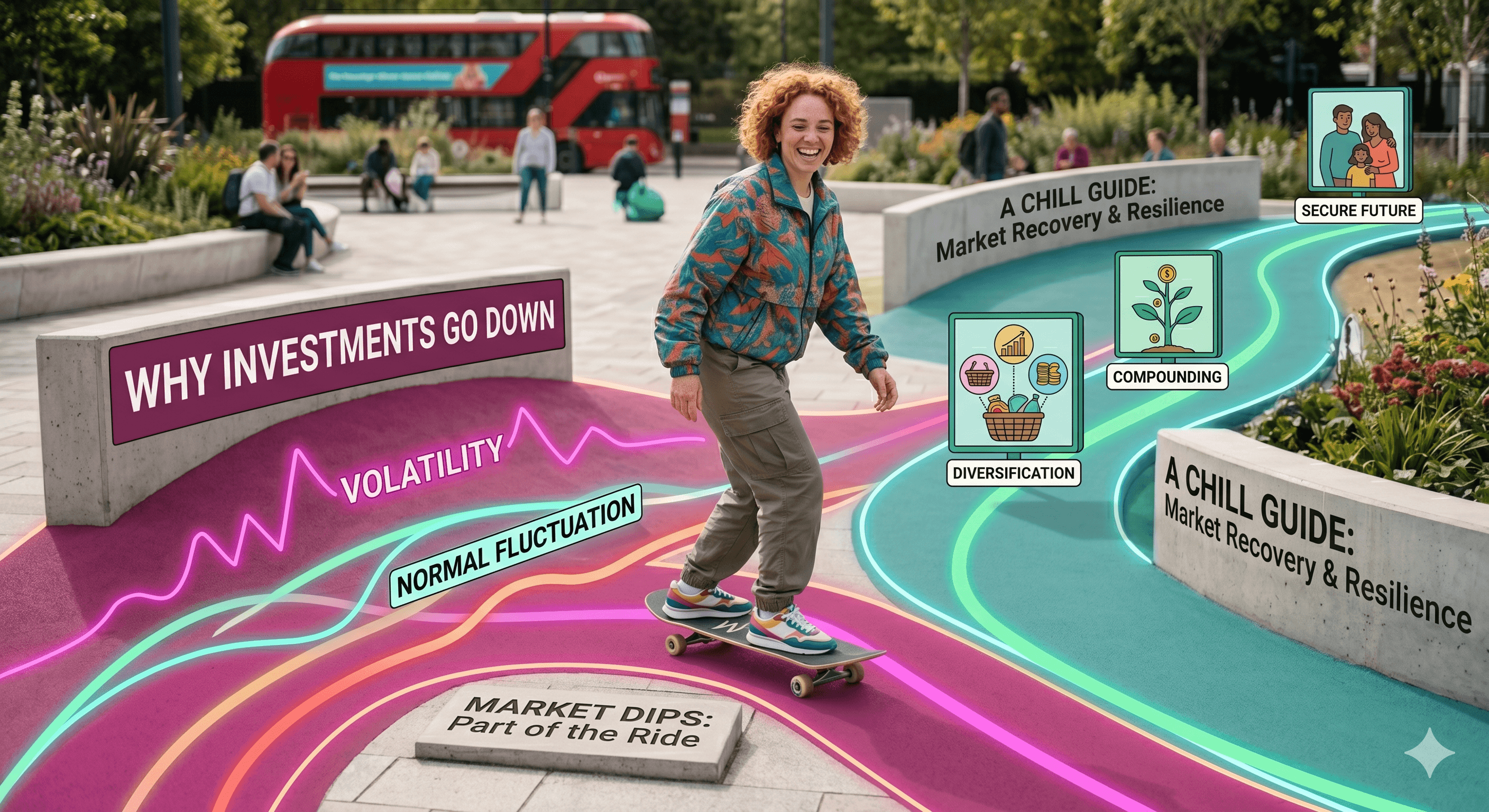
Every long-term investor watches their balance drop at some point and wonders if they've done something wrong. You haven't. Here's why markets dip, how big dips usually are, and why the best response is almost always "do nothing".
First, is something wrong with my account?
Probably not. If the news is talking about markets being down and your app is showing red, you're just seeing the same movement as millions of other investors. Market dips aren't glitches, they're a normal part of how investing works. It's actually weirder when markets don't move for a while.
Check if the amount feels proportionate to what's happening globally: if world stocks are down 5% and your balance is down around 4-6%, everything is working as intended.
Why do markets actually go down?
Lots of small reasons, mostly tied to expectations changing. Prices reflect what investors think companies will earn in the future. When something shifts (higher interest rates, slower growth, political news, inflation surprises, global events), investors collectively rethink those earnings, and prices adjust almost instantly. Sometimes it's based on real data. Sometimes it's just mood.
The boring truth is that markets spend a surprising amount of time moving on vibes, not fundamentals. Over long periods this averages out, which is why long-term investors mostly benefit from the growth while short-term traders battle the noise.
How big are "normal" dips?
Bigger than most new investors expect. Small dips of 5-10% happen multiple times every year. "Corrections" of around 10-20% tend to happen every couple of years. Proper bear markets of 20%+ show up roughly every 5-10 years. None of this is a malfunction, it's the baseline behaviour of global stock markets. The price for the long-term 7% real returns is accepting these wobbles along the way.
If your plan only works if markets never fall, the plan needs rewriting.
Does the size of the dip mean something specific is wrong?
Usually not for diversified investors. A global tracker fund can fall 20% simply because general investor sentiment shifts. It doesn't mean "the world economy is broken", it means people currently feel less confident about near-term earnings. Individual company falls can be more specific (a bad earnings report, a scandal), but broad index falls are almost always about sentiment plus macro conditions, not individual firms.
If your fund drops 15% and the FTSE All-World is down roughly 15% too, your investments are behaving exactly as they should. You're just seeing the market do its thing.
What should you actually do during a dip?
For most long-term investors, nothing. Keep your monthly contributions running. Don't check your balance every 10 minutes. Remind yourself what timeline you're investing on (if it's 10+ years, one bad year is roughly 10% of your horizon). If anything, a dip is when continuing contributions quietly benefit you most, because you're buying the same funds at a discount.
Panic-selling during a dip is how paper losses turn into permanent ones. Staying invested is how dips turn into recoveries.
When is a dip actually a concern?
Rarely. The main time to review isn't based on market moves, it's based on your life. If your time horizon has shortened (e.g. you're now planning to buy a house in two years rather than ten), it may be worth reducing risk regardless of what the market is doing. If your income has dropped and you can't maintain contributions, reducing contributions is fine. Adjusting based on your own changed circumstances is reasonable. Adjusting based on headlines usually isn't.
A simple test: if you didn't know the current market price, would you change anything about your plan? If no, nothing has actually changed.
Where Mona Fits
Mona is built to keep you steady when markets wobble. She helps you build a plan that already expects dips, coaches you through the first one you see in red, and reminds you of your timeline when the news gets loud. The job isn't to avoid every fall (impossible), it's to stay invested through them, and that's mostly about the story you tell yourself when your balance is down.
The Bottom Line
Markets go down for all sorts of reasons, often just shifting moods, and that's normal. 5-10% dips happen multiple times a year. 20%+ drops happen every 5-10 years. A diversified long-term portfolio is designed to live through these, and historically has recovered from every one. The correct reaction in almost every case is to keep contributing, stop checking your balance daily, and let compounding do its slow, quiet work. Your account isn't broken. It's just investing.
Stay chill through the dips. Start with Mona today.
For impartial information and guidance on investing, visit MoneyHelper.org.uk.