
What Happens to Your ISA Allowance at the End of the Tax Year?
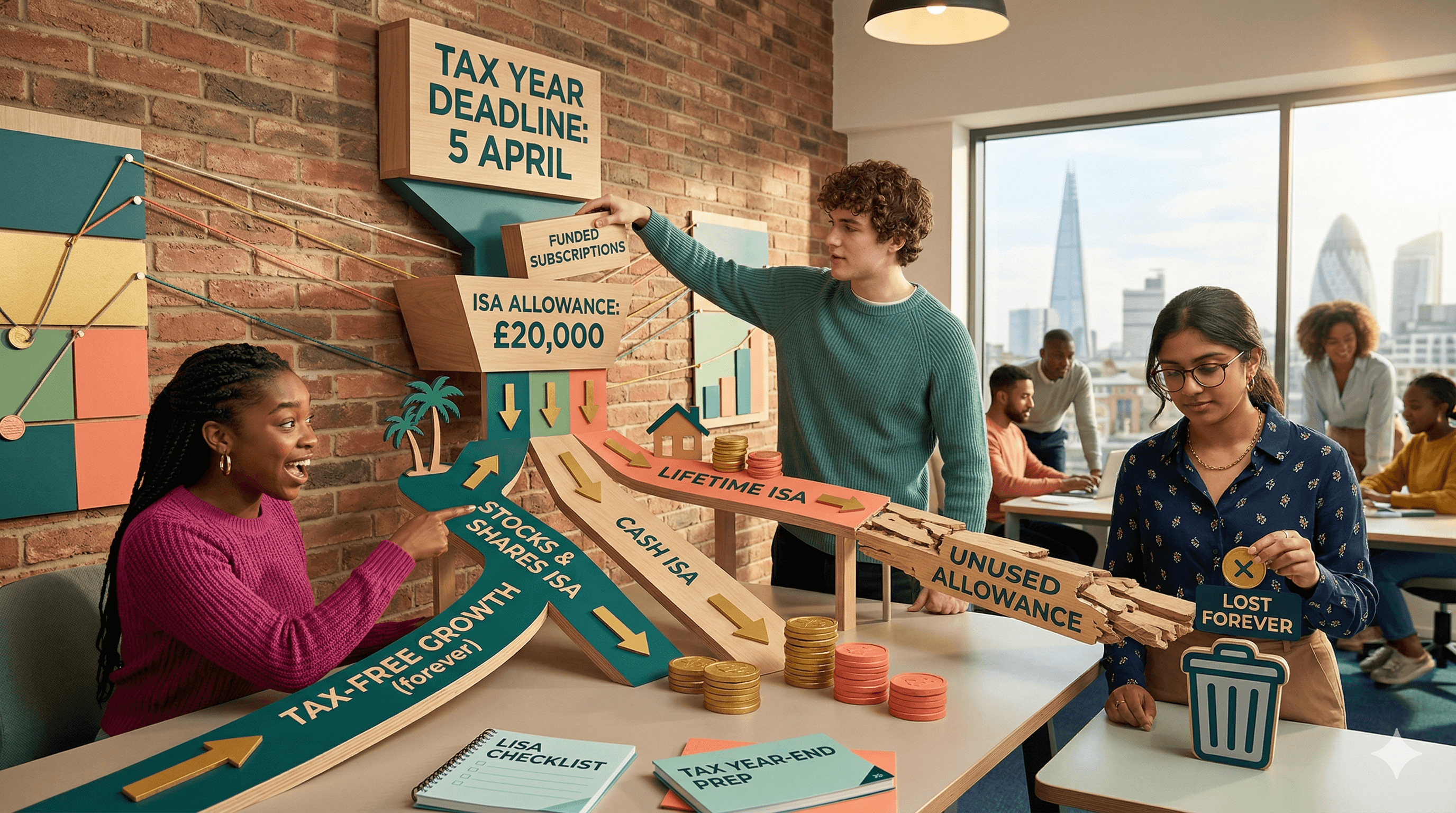
Use it or lose it: how the April deadline really works.
What exactly is your ISA allowance and when does it reset?
Your ISA allowance is £20,000 per tax year (2025/26), and it doesn’t roll over. Whatever you don’t use by 5 April simply disappears. The new tax year starts on 6 April, and you get a fresh £20,000 to use. There’s no mechanism to "catch up" - you can’t suddenly add £40,000 next year because you missed this year.
This is why ISAs are so valuable. You get a defined amount of tax-free investment space each year. But it’s also why people panic in late March, realizing they’ve forgotten about their allowance entirely.
What happens on 5 April if you haven’t used your full allowance?
The simple answer: the unused amount evaporates. If you have £5,000 left unused on 4 April, you cannot access it on 6 April. You start completely fresh with a new £20,000 allowance for the next tax year.
This design choice encourages people to plan their savings - though in practice, most people either forget about it entirely or scramble last-minute. There’s no "carryover" option and no exception for people who had other priorities during the year.
Can you move money between different ISA types in the same year?
Yes, and this is important. You have one overall £20,000 allowance, but you can split it between different types of ISAs. You might put £10,000 in a Cash ISA, £8,000 in a Stocks and Shares ISA, and £2,000 in an Innovative Finance ISA in the same tax year - as long as the total doesn’t exceed £20,000.
The key catch: you can only pay into one Cash ISA per tax year. You can switch your entire Cash ISA to a different provider, but during the year, you can’t have multiple Cash ISAs. Stocks and Shares ISAs have no such restriction - you can pay into several in one year as long as your combined deposits don’t exceed your allowance.
What is a flexible ISA and does it help you catch up?
A flexible ISA lets you withdraw money and re-contribute it in the same tax year without eating into your allowance. So if you deposit £8,000, then withdraw £5,000 in February, you can re-deposit that £5,000 before 5 April without it counting twice against your allowance.
This only works if your ISA provider offers flexibility - not all do. And it doesn’t create any "extra" allowance. You still have only £20,000 to use. What it does is let you move money around without wasting allowance if your circumstances change.
Are there any clever last-minute ISA strategies?
Here’s a strategy people use: if you have cash sitting in a savings account with interest, moving it into a Cash ISA before 5 April means future interest is tax-free. You don’t have to be a big investor to benefit - even £3,000 in a Cash ISA earning 4% saves you money on tax each year.
Another approach: if you normally invest via a Stocks and Shares ISA but have unused allowance, you could split your contribution between that and a Cash ISA for more flexibility. Some people use their allowance partly for short-term savings (Cash ISA) and partly for long-term investing (Stocks and Shares ISA).
The most important strategy, though, is simply remembering your allowance exists. Set a calendar reminder for January - don’t wait until March.
What are the most common ISA mistakes at tax year end?
The biggest one: forgetting about your allowance entirely. You work, earn money, spend it or save it in regular savings accounts, and never think about ISAs. By April, it’s gone. Over time, this costs thousands in unnecessary tax.
Another common mistake: thinking you need a huge amount to open an ISA. You don’t. Many Cash ISAs accept £1 deposits. You could use your £20,000 to open multiple small ISAs with different providers if you wanted - though that would be inefficient and confusing.
A third mistake: opening an ISA in March with a lump sum, then withdrawing it in April, thinking you’re being clever with tax planning. This works, but only if your provider allows flexible withdrawal - and it’s usually easier to just plan ahead.
Should you max out your ISA allowance every year?
Only if you can afford to without compromising other financial goals. Maxing your ISA is a good idea if you have an emergency fund, you’re paying down expensive debt, and you have money left over to invest. If you’re struggling with credit card debt or have minimal savings, a smaller ISA contribution makes more sense.
That said, ISAs are one of the few tax-free savings vehicles available. Using even part of your allowance - say £3,000 per year - compounds over 20 years into meaningful tax savings.
Where Mona Fits
Mona helps you use your ISA allowance without the scramble. Set up regular monthly contributions to your Stocks and Shares ISA, and it works automatically throughout the year. You don’t have to remember anything - money goes in consistently, and you know you’re using your allowance efficiently. No last-minute March panic.
The Bottom Line
Your £20,000 ISA allowance is one of the best tax breaks available, but it expires on 5 April with no exceptions. You cannot carry it forward, and there’s no way to reclaim it after the deadline passes. The solution is simple: decide early in the tax year how much you can afford to invest, set up regular deposits if possible, and make sure you’ve used it before the year ends. ISAs reward forward planning, not last-minute decisions.
Don’t waste your allowance. Check your ISA balance today and make your deposits count.
For impartial information and guidance on ISAs, visit MoneyHelper.org.uk.