
Renting vs Buying in the UK: Which Actually Makes You Wealthier?

The property ladder is supposed to be the path to wealth in the UK. Buy a home, build equity, and by the time you retire you'll own an asset worth hundreds of thousands of pounds. But renting is "dead money", right? Not necessarily. The truth about renting versus buying is far more nuanced than the headlines suggest. In some cases, buying is a terrible financial decision. In others, it's exactly the right choice. Here's how to actually think about it.

The "Rent is Dead Money" Myth

You've heard it a thousand times. Rent is dead money. You're paying someone else's mortgage instead of building equity in your own home. This sounds logical, but it's incomplete. Yes, rental payments don't build equity. But there's more going on financially, and it favours renters more often than the myth admits.

The myth assumes that all the money you'd spend buying a home (the deposit, mortgage payments, taxes, repairs, maintenance) is money better spent than rent. It also assumes house prices always go up, and that the emotional satisfaction of owning matters more than financial reality. None of these are always true.

Renting, meanwhile, is flexibility. You can leave with two months' notice. You can downsize easily. You're not trapped by a property that's worth less than your mortgage, or by the need to live near your job because moving would cost a fortune in stamp duty.

The True Cost of Buying: More Than the Mortgage

When you buy a home in the UK, the mortgage is just the beginning. There are costs most first-time buyers aren't ready for.

Stamp duty is a tax on property purchases. If you buy a house for £300,000, you'll pay roughly £10,000 in stamp duty (it's progressive, with no tax on the first £250,000, then 5% above that). That's £10,000 in cash you need right now, before you even move in.

Mortgage fees include the arrangement fee (typically £500 to £1,500) and surveyor fees (£400 to £800). These come out before you get the keys.

Maintenance and repairs are ongoing. The boiler breaks and costs £1,200 to fix. The roof leaks. The garden needs serious work. As a renter, you call the landlord. As an owner, you pay. Budget 1% of the property value per year for maintenance. On a £300,000 house, that's £3,000 per year, or £250 per month.

Council tax and insurance add hundreds per year. Mortgage interest (especially on larger mortgages) is substantial. A 5% mortgage on £270,000 costs roughly £13,500 per year in interest alone in the early years.

Add it up: mortgage, interest, council tax, buildings insurance, maintenance, utilities. Owning a £300,000 house probably costs £18,000 to £22,000 per year in real money, plus the principal you're paying down. Renting an equivalent property might cost £15,000 per year.

When Renting Actually Makes Financial Sense

Renting wins financially if property prices are falling or stagnant. In London in 2022-2023, some areas saw prices drop 5% to 10%. If you bought at the peak for £400,000 and it's now worth £360,000, you've lost equity while paying interest and maintenance. A renter just moved on.

Renting also wins if you might move. Every time you buy and sell, you pay 5-6% in buying and selling costs (stamp duty, solicitors, estate agents). If you own for less than 5-7 years and prices don't appreciate significantly, you might lose money. Renters avoid this friction entirely.

Renting wins if the rent-to-price ratio is very low. In some parts of London or the South East, you can rent a property for £1,500 per month that would cost £400,000 to buy. That's a rent-to-price ratio of about 4.5% per year. If property prices grow at only 3% per year, you're better off renting and investing the savings elsewhere. Historically, property in the UK has appreciated around 3-4% annually (including periods with no appreciation). Some investments return more.

Renting also makes sense if you have a smaller deposit. If you can only scrape together £20,000 for a 5% deposit (which most first-time buyers do with Help to Buy ISAs or gifts from family), you'll have a large mortgage of £300,000+ and high interest payments. Your money might work harder elsewhere.

When Buying Wins: The Long-Term Wealth Case

Buying wins if property prices in your area are rising steadily and you plan to stay for at least 7-10 years. In most of the UK outside London, property has appreciated 3-4% per year over long periods. You're not getting rich on 3% per year, but it's reliable, and it's backed by actual tangible assets.

Buying also wins when you stop paying the mortgage but keep living in the home. At 65, if you own your home outright and only pay council tax and utilities, your housing costs drop dramatically. A renter at 65 is still paying full rent, unless their income has grown to match. For retirees on fixed incomes, owning is cheaper.

Over a 25-year mortgage, assuming property appreciates 3% per year and you pay down the full mortgage, you build significant equity. A £300,000 property growing at 3% per year is worth roughly £630,000 in 25 years. You own it outright. A renter over the same 25 years has paid £375,000 in rent (at £1,250 per month) and owns nothing.

The catch: this assumes property prices actually grow, you can afford the mortgage and maintenance, you stay in the same property for 25 years, and rents don't drop. The further in the future you go, the less certain these assumptions are. But historically, it's how wealth in the UK has been built.

The Opportunity Cost Argument: Investing Your Deposit

Here's a deeper argument: what if you rented and invested the deposit instead? If you have £50,000 for a deposit, you don't use it to buy. Instead, you rent and invest the £50,000 in a stocks and shares ISA or a global index fund. Over 25 years at 7% annual growth, that becomes £428,000. Add ongoing contributions from the "savings" between rent and a mortgage, and you could build a very substantial pot.

This sounds compelling in theory. In practice, most people don't do it. The psychological pull of owning property is strong, and most people lack the discipline to invest money month after month when they could have a tangible home instead. But financially, on paper, renting and investing can outperform buying if investment returns beat property appreciation.

The problem is betting on investment returns. Markets vary wildly. Property is slower but more stable. Most people sleep better owning a home than holding a stocks and shares ISA, even if the ISA might be wealthier.

Regional Differences Matter in the UK

The renting versus buying equation varies dramatically by region. In Manchester, Liverpool, or Birmingham, properties are cheaper and returns on capital are often higher. Buying makes sense more often. In London, prices are inflated, yields are low, and renting might be smarter financially.

In cheaper regions, a £150,000 house growing at 3% per year is still meaningful growth. In expensive regions, a £500,000 property growing at 2% per year might lag inflation and alternative investments. Geography matters more than the headline advice suggests.

The Emotional versus Financial Decision

Here's the honest truth: buying a home is rarely purely a financial decision. It's emotional. You want stability, control, a place to paint the walls your colour. You want to build equity for your children. You want to feel grown up. These are all valid reasons, but they're not financial reasons.

On pure financial grounds, renting and investing might win. But on a life satisfaction basis, buying might be the better choice. Just go in with eyes open. You're not buying for wealth-building if the rent-to-price ratio is terrible. You're buying for security and control.

The mistake is combining the two. Telling yourself you're buying as an investment when really you're buying for emotional reasons, or vice versa. Be honest about why you're making the choice, and the decision becomes clearer.

Where Mona Fits

Mona helps you model both scenarios. By understanding your complete financial picture, including income, outgoings, and savings potential, you can calculate whether renting and investing would actually work for you. Most people discover they can't stick to the investing discipline, and buying makes more sense. But some discover that their local rent-to-price ratio genuinely favours renting. Knowing the numbers helps you make the choice confidently.

For more on mortgages, help to buy schemes, and property finance, visit MoneyHelper.org.uk.

The Bottom Line

Buying a home isn't always the path to wealth. It depends on property prices in your area, how long you'll stay, whether you can afford the maintenance and repairs, and what alternative investments might return. In some regions and markets, renting and investing wins financially.

Run the numbers for your specific situation. Don't assume the property ladder is always the right answer just because it's worked for previous generations.

If buying gives you genuine peace of mind and you're staying put for at least 7-10 years, go for it. Just make sure you're doing it consciously, not because you think you have to.

Join Mona’s early access waitlist

Renting vs Buying in the UK: Which Actually Makes You Wealthier?
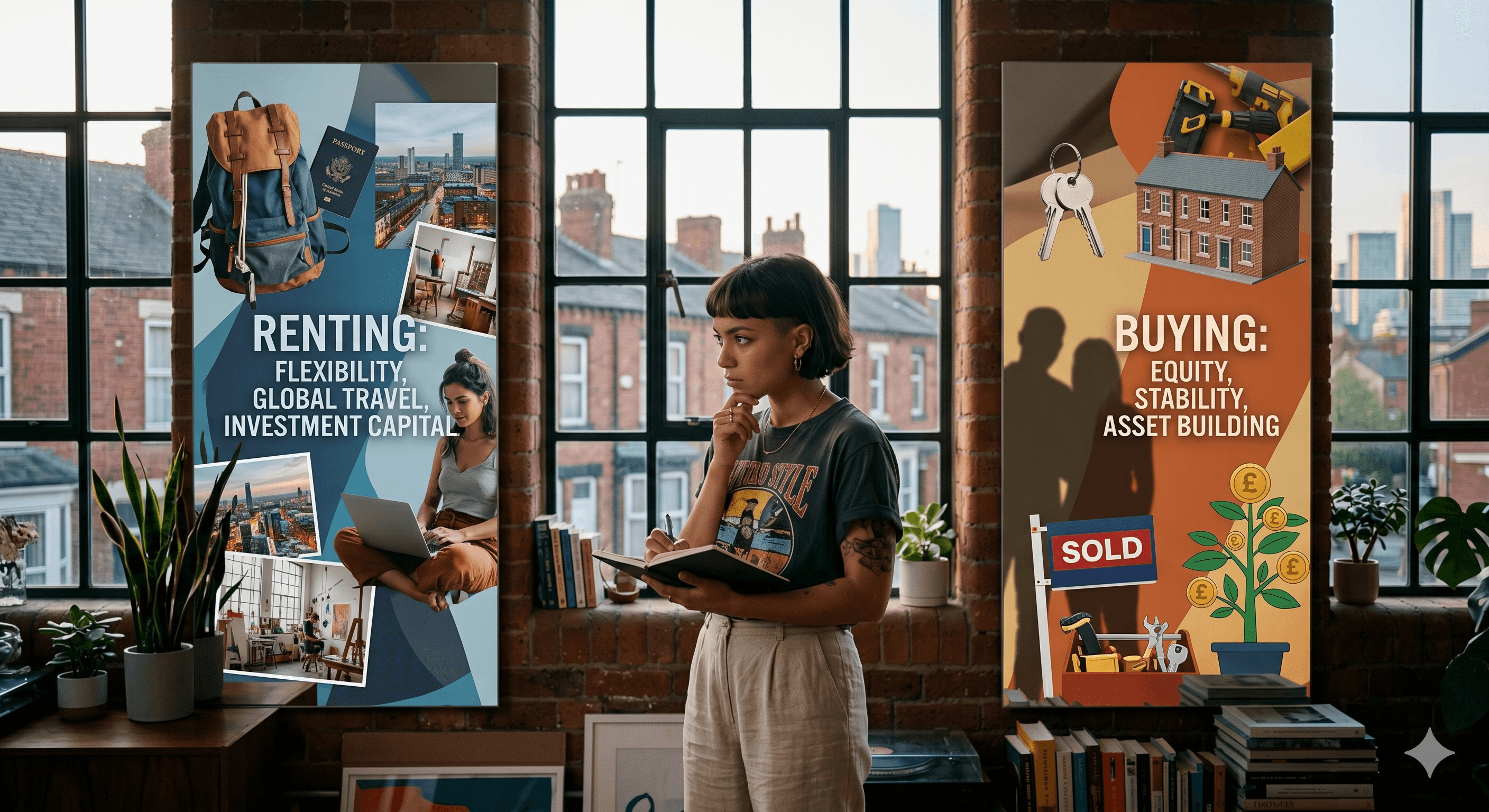
The property ladder is supposed to be the path to wealth in the UK. Buy a home, build equity, and by the time you retire you'll own an asset worth hundreds of thousands of pounds. But renting is "dead money", right? Not necessarily. The truth about renting versus buying is far more nuanced than the headlines suggest. In some cases, buying is a terrible financial decision. In others, it's exactly the right choice. Here's how to actually think about it.

The "Rent is Dead Money" Myth

You've heard it a thousand times. Rent is dead money. You're paying someone else's mortgage instead of building equity in your own home. This sounds logical, but it's incomplete. Yes, rental payments don't build equity. But there's more going on financially, and it favours renters more often than the myth admits.

The myth assumes that all the money you'd spend buying a home (the deposit, mortgage payments, taxes, repairs, maintenance) is money better spent than rent. It also assumes house prices always go up, and that the emotional satisfaction of owning matters more than financial reality. None of these are always true.

Renting, meanwhile, is flexibility. You can leave with two months' notice. You can downsize easily. You're not trapped by a property that's worth less than your mortgage, or by the need to live near your job because moving would cost a fortune in stamp duty.

The True Cost of Buying: More Than the Mortgage

When you buy a home in the UK, the mortgage is just the beginning. There are costs most first-time buyers aren't ready for.

Stamp duty is a tax on property purchases. If you buy a house for £300,000, you'll pay roughly £10,000 in stamp duty (it's progressive, with no tax on the first £250,000, then 5% above that). That's £10,000 in cash you need right now, before you even move in.

Mortgage fees include the arrangement fee (typically £500 to £1,500) and surveyor fees (£400 to £800). These come out before you get the keys.

Maintenance and repairs are ongoing. The boiler breaks and costs £1,200 to fix. The roof leaks. The garden needs serious work. As a renter, you call the landlord. As an owner, you pay. Budget 1% of the property value per year for maintenance. On a £300,000 house, that's £3,000 per year, or £250 per month.

Council tax and insurance add hundreds per year. Mortgage interest (especially on larger mortgages) is substantial. A 5% mortgage on £270,000 costs roughly £13,500 per year in interest alone in the early years.

Add it up: mortgage, interest, council tax, buildings insurance, maintenance, utilities. Owning a £300,000 house probably costs £18,000 to £22,000 per year in real money, plus the principal you're paying down. Renting an equivalent property might cost £15,000 per year.

When Renting Actually Makes Financial Sense

Renting wins financially if property prices are falling or stagnant. In London in 2022-2023, some areas saw prices drop 5% to 10%. If you bought at the peak for £400,000 and it's now worth £360,000, you've lost equity while paying interest and maintenance. A renter just moved on.

Renting also wins if you might move. Every time you buy and sell, you pay 5-6% in buying and selling costs (stamp duty, solicitors, estate agents). If you own for less than 5-7 years and prices don't appreciate significantly, you might lose money. Renters avoid this friction entirely.

Renting wins if the rent-to-price ratio is very low. In some parts of London or the South East, you can rent a property for £1,500 per month that would cost £400,000 to buy. That's a rent-to-price ratio of about 4.5% per year. If property prices grow at only 3% per year, you're better off renting and investing the savings elsewhere. Historically, property in the UK has appreciated around 3-4% annually (including periods with no appreciation). Some investments return more.

Renting also makes sense if you have a smaller deposit. If you can only scrape together £20,000 for a 5% deposit (which most first-time buyers do with Help to Buy ISAs or gifts from family), you'll have a large mortgage of £300,000+ and high interest payments. Your money might work harder elsewhere.

When Buying Wins: The Long-Term Wealth Case

Buying wins if property prices in your area are rising steadily and you plan to stay for at least 7-10 years. In most of the UK outside London, property has appreciated 3-4% per year over long periods. You're not getting rich on 3% per year, but it's reliable, and it's backed by actual tangible assets.

Buying also wins when you stop paying the mortgage but keep living in the home. At 65, if you own your home outright and only pay council tax and utilities, your housing costs drop dramatically. A renter at 65 is still paying full rent, unless their income has grown to match. For retirees on fixed incomes, owning is cheaper.

Over a 25-year mortgage, assuming property appreciates 3% per year and you pay down the full mortgage, you build significant equity. A £300,000 property growing at 3% per year is worth roughly £630,000 in 25 years. You own it outright. A renter over the same 25 years has paid £375,000 in rent (at £1,250 per month) and owns nothing.

The catch: this assumes property prices actually grow, you can afford the mortgage and maintenance, you stay in the same property for 25 years, and rents don't drop. The further in the future you go, the less certain these assumptions are. But historically, it's how wealth in the UK has been built.

The Opportunity Cost Argument: Investing Your Deposit

Here's a deeper argument: what if you rented and invested the deposit instead? If you have £50,000 for a deposit, you don't use it to buy. Instead, you rent and invest the £50,000 in a stocks and shares ISA or a global index fund. Over 25 years at 7% annual growth, that becomes £428,000. Add ongoing contributions from the "savings" between rent and a mortgage, and you could build a very substantial pot.

This sounds compelling in theory. In practice, most people don't do it. The psychological pull of owning property is strong, and most people lack the discipline to invest money month after month when they could have a tangible home instead. But financially, on paper, renting and investing can outperform buying if investment returns beat property appreciation.

The problem is betting on investment returns. Markets vary wildly. Property is slower but more stable. Most people sleep better owning a home than holding a stocks and shares ISA, even if the ISA might be wealthier.

Regional Differences Matter in the UK

The renting versus buying equation varies dramatically by region. In Manchester, Liverpool, or Birmingham, properties are cheaper and returns on capital are often higher. Buying makes sense more often. In London, prices are inflated, yields are low, and renting might be smarter financially.

In cheaper regions, a £150,000 house growing at 3% per year is still meaningful growth. In expensive regions, a £500,000 property growing at 2% per year might lag inflation and alternative investments. Geography matters more than the headline advice suggests.

The Emotional versus Financial Decision

Here's the honest truth: buying a home is rarely purely a financial decision. It's emotional. You want stability, control, a place to paint the walls your colour. You want to build equity for your children. You want to feel grown up. These are all valid reasons, but they're not financial reasons.

On pure financial grounds, renting and investing might win. But on a life satisfaction basis, buying might be the better choice. Just go in with eyes open. You're not buying for wealth-building if the rent-to-price ratio is terrible. You're buying for security and control.

The mistake is combining the two. Telling yourself you're buying as an investment when really you're buying for emotional reasons, or vice versa. Be honest about why you're making the choice, and the decision becomes clearer.

Where Mona Fits

Mona helps you model both scenarios. By understanding your complete financial picture, including income, outgoings, and savings potential, you can calculate whether renting and investing would actually work for you. Most people discover they can't stick to the investing discipline, and buying makes more sense. But some discover that their local rent-to-price ratio genuinely favours renting. Knowing the numbers helps you make the choice confidently.

For more on mortgages, help to buy schemes, and property finance, visit MoneyHelper.org.uk.

The Bottom Line

Buying a home isn't always the path to wealth. It depends on property prices in your area, how long you'll stay, whether you can afford the maintenance and repairs, and what alternative investments might return. In some regions and markets, renting and investing wins financially.

Run the numbers for your specific situation. Don't assume the property ladder is always the right answer just because it's worked for previous generations.

If buying gives you genuine peace of mind and you're staying put for at least 7-10 years, go for it. Just make sure you're doing it consciously, not because you think you have to.


Join Mona’s early access waitlist