
How to Stop Emotional Spending Without Feeling Deprived

You told yourself you wouldn't do it again. But the day was awful, your energy was gone, and suddenly you're standing in the kitchen with a Deliveroo receipt for £34 and a bag from ASOS you don't remember ordering.

Emotional spending is one of the most common money habits in the UK, and one of the least talked about. It's not about being irresponsible or bad with money. It's about using purchases to manage feelings, and it works brilliantly in the short term. The problem is what it does to your bank balance, your savings goals, and your self-trust over time.

This article isn't about cutting yourself off from everything you enjoy. It's about understanding why you spend emotionally, breaking the automatic loop, and finding ways to feel good that don't leave you with buyer's remorse.

Why We Spend When We Feel Bad

Emotional spending is a form of self-soothing. When you're stressed, bored, anxious, or even just tired, your brain looks for the fastest route to feeling better. Buying something triggers a hit of dopamine, the same chemical that fires when you eat chocolate or get a notification on your phone. It feels good. Briefly.

The problem isn't that you want to feel better. That's completely human. The problem is that spending becomes the default coping mechanism, the thing you do on autopilot before you've even noticed the emotion underneath it.

Emotional spending isn't a character flaw. It's a habit loop, and habit loops can be rewired.

Common emotional spending triggers include stress at work, loneliness, boredom on a quiet evening, comparison after scrolling social media, and the feeling of "deserving a treat" after a hard week. Recognising your personal triggers is the first step to changing the pattern.

The Stress-Spend Cycle (and Why Willpower Alone Won't Break It)

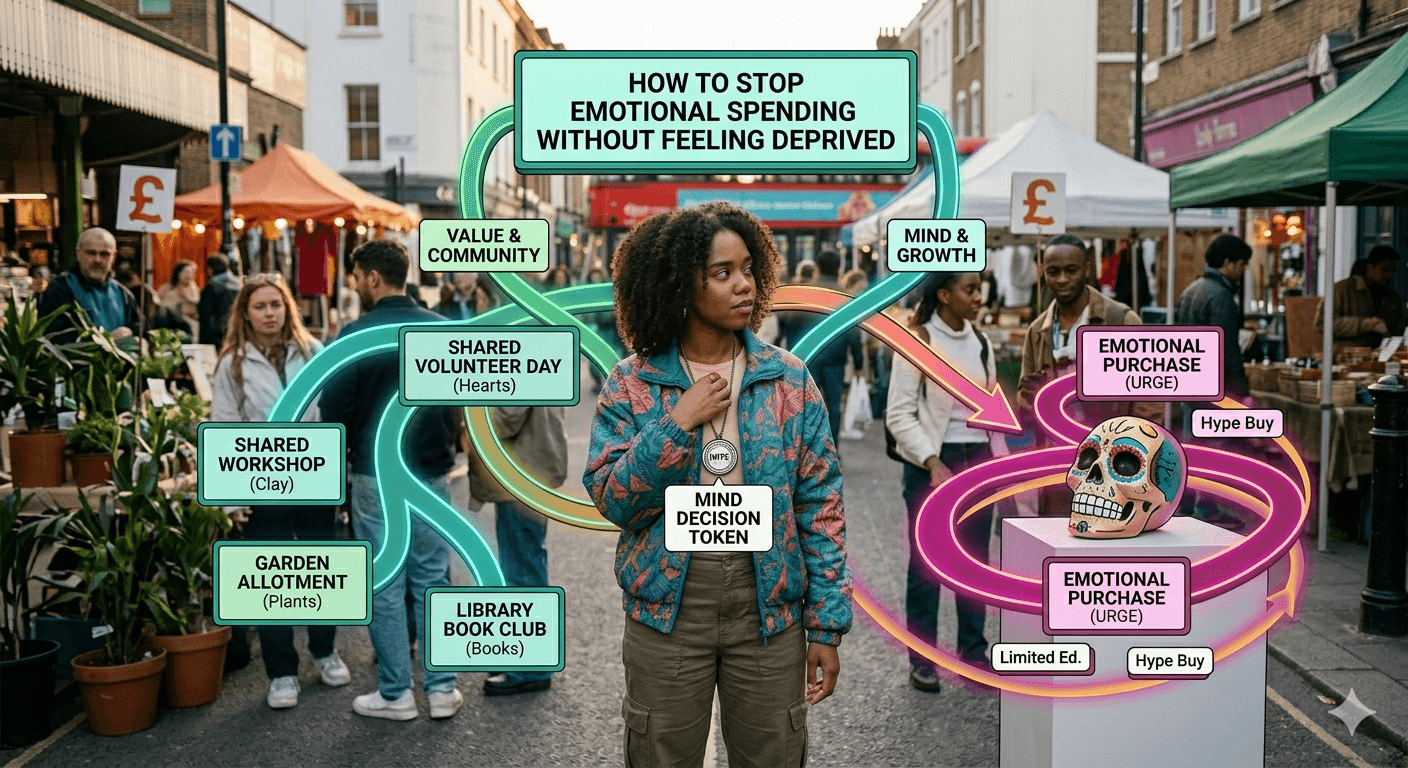
Here's how the cycle typically works. You feel stressed or low. You buy something. You feel a brief rush of pleasure. Then the guilt arrives. The guilt makes you feel worse. And now you're back to feeling stressed, except you're also £50 lighter.

Willpower is not the answer here. Willpower is a finite resource, and if you're already depleted from a tough day, you have nothing left to resist with. That's why "just stop spending" advice never works. You need a system, not more self-discipline.

The good news is that once you understand the loop, you can interrupt it at multiple points. You can change the trigger, change the response, or change the reward. You don't have to fight your own brain, you just have to redirect it.

The 24-Hour Rule: Simple but Powerful

Before any non-essential purchase over £20, wait 24 hours. That's it. Don't delete it from your basket. Don't talk yourself out of it. Just wait.

Most emotional purchases lose their urgency within a day.

What you'll often find is that the desire fades once the emotion passes. If you still want it after 24 hours, buy it guilt-free. The point isn't to deny yourself things, it's to make sure you're choosing them rather than reacting to a feeling.

Pro tip: Put items in a "saved for later" list rather than buying immediately. Many people find that the act of adding something to a list gives them enough of a dopamine hit to satisfy the urge without spending a penny.

Build a "Feel Good" List That Doesn't Cost Money

If spending is your go-to way to feel better, you need alternatives ready before the urge hits. Write a list of things that genuinely improve your mood without costing money, and keep it somewhere visible.

Here are some ideas to get you started:

  • A 20-minute walk outside - research consistently shows this reduces stress hormones

  • Calling or texting a friend - connection is one of the most powerful mood boosters

  • A hot bath or shower - simple but effective for resetting your nervous system

  • Cooking something from scratch - the process is meditative and you get a meal at the end

  • Tidying one small area - instant sense of control and accomplishment

  • Writing down how you feel - even three sentences can break the autopilot loop

The key is having this list ready in advance. When you're in the middle of an emotional spending urge, you won't be in the mood to brainstorm alternatives. Do the thinking now so future-you has options.

Unsubscribe, Unfollow, Remove

A huge amount of emotional spending is triggered by marketing. Sale emails, Instagram ads, influencer hauls, "last chance" notifications. These are designed to create urgency and desire where none existed five seconds ago.

Unsubscribe from every retail email. Every single one. If you need something from a shop, you can go to their website directly. You don't need H&M reminding you about 20% off when you're trying to save for a holiday.

You can't resist what you never see.

Unfollow social media accounts that make you want to spend. This isn't about being extreme, it's about designing your environment to support your goals rather than undermine them. You wouldn't keep biscuits on your desk if you were trying to eat healthier. Same principle.

Give Yourself a Guilt-Free Fun Budget

This is the part most budgeting advice gets wrong. People try to eliminate all non-essential spending, feel deprived, and then binge-spend to compensate. It's the financial equivalent of a crash diet followed by a takeaway marathon.

Instead, build a "fun money" category into your budget. This is money you're allowed to spend on whatever you want, no guilt, no justification needed. It could be £50 a month or £200, depending on your income and goals. The amount matters less than the permission.

When you know you have £100 set aside for treats, you spend it more intentionally. You might save your fun budget for one really good meal out instead of five impulse coffees. The total spending might be the same, but the satisfaction is much higher.

A budget isn't a punishment. It's a plan that includes the things you enjoy.

Track the Emotions, Not Just the Numbers

Most spending trackers focus on categories: groceries, transport, entertainment. That's useful, but it misses the emotional dimension entirely.

Try adding a simple note to your spending: how were you feeling when you bought it? Stressed? Bored? Happy? Celebrating? After a few weeks, you'll start to see patterns. Maybe you always overspend on Fridays after a long week. Maybe Amazon orders spike when you've had an argument with your partner.

Once you see the pattern, you can plan for it. If Friday nights are your danger zone, schedule something enjoyable that evening that doesn't involve spending, a film night, a long bath, cooking something special with ingredients you already have.

Where Mona Fits

Mona Money makes it easy to track not just what you spend, but when and why. By spotting patterns in your spending behaviour, Mona can help you identify emotional triggers before they drain your account. You can set up your fun budget, track your 24-hour rule wins, and celebrate the weeks where you chose differently. It's like having a financial friend who notices things you might miss.

The Bottom Line

Emotional spending isn't about being bad with money. It's about using money to manage feelings, and the fix isn't deprivation, it's awareness plus better alternatives.

Start with the 24-hour rule, build your feel-good list, and give yourself a guilt-free fun budget. Small changes, applied consistently, break the cycle without making you miserable.

For more guidance on managing your spending and building better financial habits, visit MoneyHelper.org.uk.

Join Mona’s early access waitlist

How to Stop Emotional Spending Without Feeling Deprived
You told yourself you wouldn't do it again. But the day was awful, your energy was gone, and suddenly you're standing in the kitchen with a Deliveroo receipt for £34 and a bag from ASOS you don't remember ordering.

Emotional spending is one of the most common money habits in the UK, and one of the least talked about. It's not about being irresponsible or bad with money. It's about using purchases to manage feelings, and it works brilliantly in the short term. The problem is what it does to your bank balance, your savings goals, and your self-trust over time.

This article isn't about cutting yourself off from everything you enjoy. It's about understanding why you spend emotionally, breaking the automatic loop, and finding ways to feel good that don't leave you with buyer's remorse.

Why We Spend When We Feel Bad

Emotional spending is a form of self-soothing. When you're stressed, bored, anxious, or even just tired, your brain looks for the fastest route to feeling better. Buying something triggers a hit of dopamine, the same chemical that fires when you eat chocolate or get a notification on your phone. It feels good. Briefly.

The problem isn't that you want to feel better. That's completely human. The problem is that spending becomes the default coping mechanism, the thing you do on autopilot before you've even noticed the emotion underneath it.

Emotional spending isn't a character flaw. It's a habit loop, and habit loops can be rewired.

Common emotional spending triggers include stress at work, loneliness, boredom on a quiet evening, comparison after scrolling social media, and the feeling of "deserving a treat" after a hard week. Recognising your personal triggers is the first step to changing the pattern.

The Stress-Spend Cycle (and Why Willpower Alone Won't Break It)

Here's how the cycle typically works. You feel stressed or low. You buy something. You feel a brief rush of pleasure. Then the guilt arrives. The guilt makes you feel worse. And now you're back to feeling stressed, except you're also £50 lighter.

Willpower is not the answer here. Willpower is a finite resource, and if you're already depleted from a tough day, you have nothing left to resist with. That's why "just stop spending" advice never works. You need a system, not more self-discipline.

The good news is that once you understand the loop, you can interrupt it at multiple points. You can change the trigger, change the response, or change the reward. You don't have to fight your own brain, you just have to redirect it.

The 24-Hour Rule: Simple but Powerful

Before any non-essential purchase over £20, wait 24 hours. That's it. Don't delete it from your basket. Don't talk yourself out of it. Just wait.

Most emotional purchases lose their urgency within a day.

What you'll often find is that the desire fades once the emotion passes. If you still want it after 24 hours, buy it guilt-free. The point isn't to deny yourself things, it's to make sure you're choosing them rather than reacting to a feeling.

Pro tip: Put items in a "saved for later" list rather than buying immediately. Many people find that the act of adding something to a list gives them enough of a dopamine hit to satisfy the urge without spending a penny.

Build a "Feel Good" List That Doesn't Cost Money

If spending is your go-to way to feel better, you need alternatives ready before the urge hits. Write a list of things that genuinely improve your mood without costing money, and keep it somewhere visible.

Here are some ideas to get you started:

  • A 20-minute walk outside - research consistently shows this reduces stress hormones

  • Calling or texting a friend - connection is one of the most powerful mood boosters

  • A hot bath or shower - simple but effective for resetting your nervous system

  • Cooking something from scratch - the process is meditative and you get a meal at the end

  • Tidying one small area - instant sense of control and accomplishment

  • Writing down how you feel - even three sentences can break the autopilot loop

The key is having this list ready in advance. When you're in the middle of an emotional spending urge, you won't be in the mood to brainstorm alternatives. Do the thinking now so future-you has options.

Unsubscribe, Unfollow, Remove

A huge amount of emotional spending is triggered by marketing. Sale emails, Instagram ads, influencer hauls, "last chance" notifications. These are designed to create urgency and desire where none existed five seconds ago.

Unsubscribe from every retail email. Every single one. If you need something from a shop, you can go to their website directly. You don't need H&M reminding you about 20% off when you're trying to save for a holiday.

You can't resist what you never see.

Unfollow social media accounts that make you want to spend. This isn't about being extreme, it's about designing your environment to support your goals rather than undermine them. You wouldn't keep biscuits on your desk if you were trying to eat healthier. Same principle.

Give Yourself a Guilt-Free Fun Budget

This is the part most budgeting advice gets wrong. People try to eliminate all non-essential spending, feel deprived, and then binge-spend to compensate. It's the financial equivalent of a crash diet followed by a takeaway marathon.

Instead, build a "fun money" category into your budget. This is money you're allowed to spend on whatever you want, no guilt, no justification needed. It could be £50 a month or £200, depending on your income and goals. The amount matters less than the permission.

When you know you have £100 set aside for treats, you spend it more intentionally. You might save your fun budget for one really good meal out instead of five impulse coffees. The total spending might be the same, but the satisfaction is much higher.

A budget isn't a punishment. It's a plan that includes the things you enjoy.

Track the Emotions, Not Just the Numbers

Most spending trackers focus on categories: groceries, transport, entertainment. That's useful, but it misses the emotional dimension entirely.

Try adding a simple note to your spending: how were you feeling when you bought it? Stressed? Bored? Happy? Celebrating? After a few weeks, you'll start to see patterns. Maybe you always overspend on Fridays after a long week. Maybe Amazon orders spike when you've had an argument with your partner.

Once you see the pattern, you can plan for it. If Friday nights are your danger zone, schedule something enjoyable that evening that doesn't involve spending, a film night, a long bath, cooking something special with ingredients you already have.

Where Mona Fits

Mona Money makes it easy to track not just what you spend, but when and why. By spotting patterns in your spending behaviour, Mona can help you identify emotional triggers before they drain your account. You can set up your fun budget, track your 24-hour rule wins, and celebrate the weeks where you chose differently. It's like having a financial friend who notices things you might miss.

The Bottom Line

Emotional spending isn't about being bad with money. It's about using money to manage feelings, and the fix isn't deprivation, it's awareness plus better alternatives.

Start with the 24-hour rule, build your feel-good list, and give yourself a guilt-free fun budget. Small changes, applied consistently, break the cycle without making you miserable.

For more guidance on managing your spending and building better financial habits, visit MoneyHelper.org.uk.


Join Mona’s early access waitlist