
How to Save for a House Deposit While Paying Rent

Saving for a house deposit while paying rent feels impossible, but it's not - it just requires a plan and some non-negotiable discipline.

You're paying rent, council tax, and utilities while everyone else seems to be buying homes. It feels unfair, and honestly, it is - but millions of UK renters have bought homes despite paying rent first. The difference between those who manage it and those who don't isn't usually luck or inheritance, it's a concrete strategy and the determination to stick with it. Let's build your plan to make homeownership possible.

The Reality of Saving on a Renter's Budget

Let's be honest: saving while renting is genuinely harder than saving while owning. Renters pay more housing costs relative to income in most areas. You can't claim mortgage interest relief. You can't build equity. Your rent might jump 10% at renewal. It's frustrating and real.

But here's what works: renters who save successfully treat their deposit savings like a bill that must be paid before anything else. Not after expenses. Before. This isn't punishment, it's prioritisation. If you earn £2,500 monthly and can save £300, that money moves to a savings account before you even see it in your current account.

Even £200 per month, consistently saved, becomes £10,000 in under 5 years - enough for a deposit on many UK properties.

The secret isn't earning more, it's spending less on things that don't move you toward homeownership. That's not being miserable - it's being strategic for 3-5 years so you can own a home for the next 40.

How Much Deposit Do You Actually Need

First, let's destroy the myth that you need 20% down. You don't. Most first-time buyers use a 5% mortgage (5% down, 95% mortgage). Some use 10%. To buy a £250,000 home with 5% down, you need £12,500. With 10%, you need £25,000. That's still a lot, but it's not impossible.

Your deposit needs to cover not just the 5-10% equity stake, but also fees. Surveyor costs (£500-£1,500). Conveyancing fees (£1,000-£2,000). Searches and other legal costs (£200-£500). Mortgage arrangement fees (some lenders charge these). Factor in £2,000-£3,000 extra for fees on top of your deposit.

So if you're buying a £250,000 home with 5% down, you need roughly £12,500 deposit plus £2,500 fees. That's £15,000 total. Achievable if you save £300 per month for 50 months (roughly 4 years). Achievable if you save £250 per month for 60 months (5 years). Not easy, but definitely achievable.

Reality check: most first-time buyers save £15,000-£30,000 before buying. Some take longer, some get family help. But the point is you don't need an impossible amount.

Creating a Realistic Savings Target and Timeline

Work backwards from where you want to be. Decide: what property price can I realistically target? (Use property websites to see what's available in areas you'd actually live.) Calculate 5% of that plus £2,500 for fees. That's your target number.

Now decide your timeline. Buying in 3 years? 5 years? 7 years? Divide your target by the number of months. That's your required monthly savings. If you target £20,000 in 5 years, that's roughly £333 per month. Can you actually do that on your income after rent, bills, food, and transport?

If you can't hit that number, either adjust your target downward (look at cheaper properties), extend your timeline (save for 7 years instead of 5), or increase your income (second job, freelance work, asking for a raise). One of those three levers has to move.

Extending your timeline from 5 years to 7 years reduces your required monthly saving from £333 to £238 - a difference that might actually fit your budget.

The LISA - Your Secret Weapon

If you're under 40 and saving for your first home, the Lifetime ISA (LISA) is genuinely worth exploring. You can save up to £4,000 per year. For every £4,000 you put in, the government adds £1,000. That's a 25% instant return. You can save for up to 10 years, meaning you could have up to £50,000 from your savings plus £12,500 free government money.

The catch: you must not touch the money until you buy a home (or turn 60). If you withdraw it early for anything else, you get your money back but lose the government bonus and pay a penalty. This makes it brilliant if you're genuinely committed to saving for a house, terrible if you're saving with one eye on using it for a car or holiday.

The property must be under £450,000 and it must be your only home. So if you're buying a modest flat to live in yourself, a LISA is usually brilliant. If you're buying a second property or an investment flat, it doesn't work.

If you're eligible, a LISA is almost free money. The main UK LISAs are offered by NS&I and various banks. Open one, contribute what you can each year, and watch the government top-up boost your deposit significantly.

Shared Ownership and Help to Buy Schemes

If saving a big deposit feels impossible, shared ownership might be an alternative. With shared ownership, you buy a share of a property (typically 25% to 75%) and pay rent on the share you don't own. You need a much smaller deposit (usually 5-10% of your share, not the full property price) and can eventually buy more shares to own it outright.

The catch: you pay rent to a housing association on the share you don't own, so your total housing cost is higher than a full mortgage. Over time, as you buy more shares, that rental component shrinks. It's not ideal long-term, but it can be a stepping stone to full ownership if you can't save a big deposit yet.

Help to Buy schemes vary by region and change frequently, so check what's available in your area. Some regions offer government grants or loans to first-time buyers. These schemes typically have property price limits and income limits, so you may or may not qualify.

Shared ownership lets you own a piece of your home while saving for more - it's a stepping stone, not a final destination.

Where to Actually Save the Money

Your house deposit savings should go in a high-interest savings account, separate from your emergency fund. You need access to the money within a few years, so don't lock it in fixed bonds (unless you're absolutely certain you won't need it before the term ends). Look for easy-access accounts paying 4-5% AER. Every percentage point matters when you're saving tens of thousands.

Use a LISA for as much as you can contribute (up to £4,000 annually). Put the rest in a high-interest savings account. Don't keep it in your current account, where you might accidentally spend it. Automate the transfer the day after payday, so the money moves before temptation strikes.

If you're saving for 5+ years, you could consider investing some money (stocks and shares ISA, for example). But as you get closer to buying - say, in the final year - move everything to safe savings accounts. You don't want your deposit fluctuating wildly just as you're ready to make an offer.

Cutting Your Budget to Hit Savings Goals

The hard truth: if you can't save £300 per month on your current income, you either need more income or less expenses. Here's where renters usually find money: subscriptions you've forgotten about (£10-£20 per month). Eating out reduced from 3x per week to 1x per week (saves £60-£100). Switching to cheaper groceries (saves £30-£50). Switching energy supplier (saves £20-£40). Cancelling the gym and exercising at home (saves £40-£50).

None of these cuts are glamorous, but collectively they often free up £150-£300 per month with no sacrifice to your actual quality of life. You're still eating well, still going out, still moving your body. You're just being intentional about it.

The cuts that shouldn't be on the table: cutting investment in your health, your education, or relationships. Saving to buy a house is good. But not at the cost of your health, your friendships, or your mental wellbeing.

Planning Your Actual Home Purchase

Once you've got your deposit saved, the actual buying process takes 8-12 weeks. You need a mortgage in principle (proof from a lender that they'll lend to you), then find a property, make an offer, get surveyed, complete searches, and complete the purchase. Save a few thousand extra for moving costs, immediate repairs, and establishing yourself in the new home.

Don't buy as much house as you can borrow. Buy what you can comfortably afford. If the bank offers you a £300,000 mortgage but that means you're barely scraping payments, go for a £250,000 property instead. You need headroom for life to happen: a car break-down, job change, or needing the boiler replacing.

The goal isn't to own the biggest house, it's to own a house. Starting modest and upgrading later is better than stretching too far and struggling.

Where Mona Fits

Saving for a house while managing rent and bills requires tracking your progress and staying motivated. Mona Money helps you visualise your savings goal, see how you're tracking week by week, understand where you can cut spending, and calculate how close you are to being mortgage-ready. Mona makes the abstract goal of "save for a deposit" concrete and trackable.

The Bottom Line

Saving for a house deposit while paying rent is possible, but it requires a plan, discipline, and often, extended timelines.

Calculate your target, set your timeline, open a LISA if eligible, and automate savings before you see the money. Cut unnecessary expenses, not your quality of life. Consider shared ownership or government schemes if available in your area. Don't try to buy the biggest possible house - buy a modest property that you can comfortably afford. The journey from renting to owning takes time, but thousands of UK renters do it every year. You can too.

Disclaimer: This article is educational content. For regulated financial guidance, visit MoneyHelper.org.uk, the UK government's free financial advice service.

Join Mona’s early access waitlist

How to Save for a House Deposit While Paying Rent
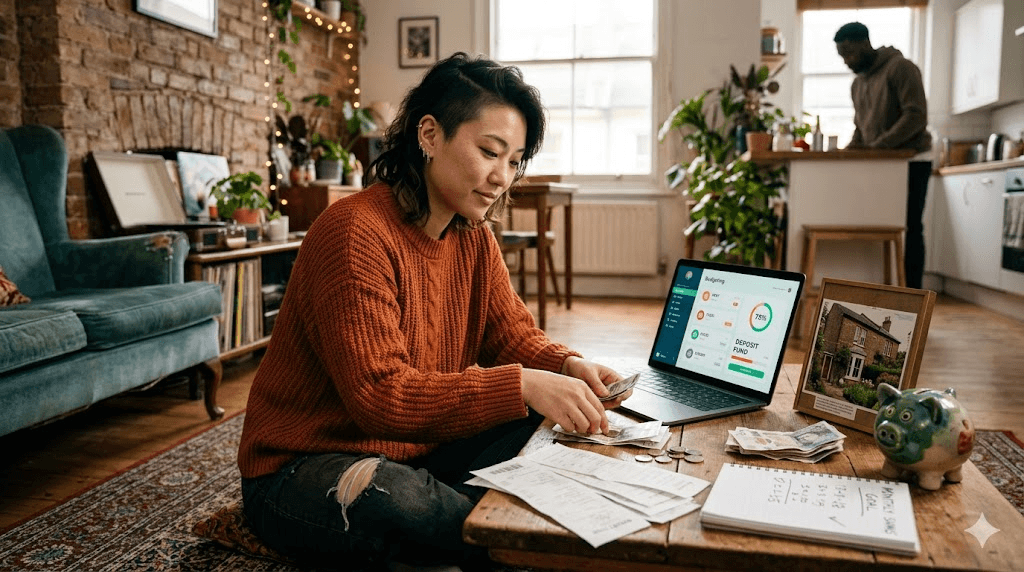
Saving for a house deposit while paying rent feels impossible, but it's not - it just requires a plan and some non-negotiable discipline.

You're paying rent, council tax, and utilities while everyone else seems to be buying homes. It feels unfair, and honestly, it is - but millions of UK renters have bought homes despite paying rent first. The difference between those who manage it and those who don't isn't usually luck or inheritance, it's a concrete strategy and the determination to stick with it. Let's build your plan to make homeownership possible.

The Reality of Saving on a Renter's Budget

Let's be honest: saving while renting is genuinely harder than saving while owning. Renters pay more housing costs relative to income in most areas. You can't claim mortgage interest relief. You can't build equity. Your rent might jump 10% at renewal. It's frustrating and real.

But here's what works: renters who save successfully treat their deposit savings like a bill that must be paid before anything else. Not after expenses. Before. This isn't punishment, it's prioritisation. If you earn £2,500 monthly and can save £300, that money moves to a savings account before you even see it in your current account.

Even £200 per month, consistently saved, becomes £10,000 in under 5 years - enough for a deposit on many UK properties.

The secret isn't earning more, it's spending less on things that don't move you toward homeownership. That's not being miserable - it's being strategic for 3-5 years so you can own a home for the next 40.

How Much Deposit Do You Actually Need

First, let's destroy the myth that you need 20% down. You don't. Most first-time buyers use a 5% mortgage (5% down, 95% mortgage). Some use 10%. To buy a £250,000 home with 5% down, you need £12,500. With 10%, you need £25,000. That's still a lot, but it's not impossible.

Your deposit needs to cover not just the 5-10% equity stake, but also fees. Surveyor costs (£500-£1,500). Conveyancing fees (£1,000-£2,000). Searches and other legal costs (£200-£500). Mortgage arrangement fees (some lenders charge these). Factor in £2,000-£3,000 extra for fees on top of your deposit.

So if you're buying a £250,000 home with 5% down, you need roughly £12,500 deposit plus £2,500 fees. That's £15,000 total. Achievable if you save £300 per month for 50 months (roughly 4 years). Achievable if you save £250 per month for 60 months (5 years). Not easy, but definitely achievable.

Reality check: most first-time buyers save £15,000-£30,000 before buying. Some take longer, some get family help. But the point is you don't need an impossible amount.

Creating a Realistic Savings Target and Timeline

Work backwards from where you want to be. Decide: what property price can I realistically target? (Use property websites to see what's available in areas you'd actually live.) Calculate 5% of that plus £2,500 for fees. That's your target number.

Now decide your timeline. Buying in 3 years? 5 years? 7 years? Divide your target by the number of months. That's your required monthly savings. If you target £20,000 in 5 years, that's roughly £333 per month. Can you actually do that on your income after rent, bills, food, and transport?

If you can't hit that number, either adjust your target downward (look at cheaper properties), extend your timeline (save for 7 years instead of 5), or increase your income (second job, freelance work, asking for a raise). One of those three levers has to move.

Extending your timeline from 5 years to 7 years reduces your required monthly saving from £333 to £238 - a difference that might actually fit your budget.

The LISA - Your Secret Weapon

If you're under 40 and saving for your first home, the Lifetime ISA (LISA) is genuinely worth exploring. You can save up to £4,000 per year. For every £4,000 you put in, the government adds £1,000. That's a 25% instant return. You can save for up to 10 years, meaning you could have up to £50,000 from your savings plus £12,500 free government money.

The catch: you must not touch the money until you buy a home (or turn 60). If you withdraw it early for anything else, you get your money back but lose the government bonus and pay a penalty. This makes it brilliant if you're genuinely committed to saving for a house, terrible if you're saving with one eye on using it for a car or holiday.

The property must be under £450,000 and it must be your only home. So if you're buying a modest flat to live in yourself, a LISA is usually brilliant. If you're buying a second property or an investment flat, it doesn't work.

If you're eligible, a LISA is almost free money. The main UK LISAs are offered by NS&I and various banks. Open one, contribute what you can each year, and watch the government top-up boost your deposit significantly.

Shared Ownership and Help to Buy Schemes

If saving a big deposit feels impossible, shared ownership might be an alternative. With shared ownership, you buy a share of a property (typically 25% to 75%) and pay rent on the share you don't own. You need a much smaller deposit (usually 5-10% of your share, not the full property price) and can eventually buy more shares to own it outright.

The catch: you pay rent to a housing association on the share you don't own, so your total housing cost is higher than a full mortgage. Over time, as you buy more shares, that rental component shrinks. It's not ideal long-term, but it can be a stepping stone to full ownership if you can't save a big deposit yet.

Help to Buy schemes vary by region and change frequently, so check what's available in your area. Some regions offer government grants or loans to first-time buyers. These schemes typically have property price limits and income limits, so you may or may not qualify.

Shared ownership lets you own a piece of your home while saving for more - it's a stepping stone, not a final destination.

Where to Actually Save the Money

Your house deposit savings should go in a high-interest savings account, separate from your emergency fund. You need access to the money within a few years, so don't lock it in fixed bonds (unless you're absolutely certain you won't need it before the term ends). Look for easy-access accounts paying 4-5% AER. Every percentage point matters when you're saving tens of thousands.

Use a LISA for as much as you can contribute (up to £4,000 annually). Put the rest in a high-interest savings account. Don't keep it in your current account, where you might accidentally spend it. Automate the transfer the day after payday, so the money moves before temptation strikes.

If you're saving for 5+ years, you could consider investing some money (stocks and shares ISA, for example). But as you get closer to buying - say, in the final year - move everything to safe savings accounts. You don't want your deposit fluctuating wildly just as you're ready to make an offer.

Cutting Your Budget to Hit Savings Goals

The hard truth: if you can't save £300 per month on your current income, you either need more income or less expenses. Here's where renters usually find money: subscriptions you've forgotten about (£10-£20 per month). Eating out reduced from 3x per week to 1x per week (saves £60-£100). Switching to cheaper groceries (saves £30-£50). Switching energy supplier (saves £20-£40). Cancelling the gym and exercising at home (saves £40-£50).

None of these cuts are glamorous, but collectively they often free up £150-£300 per month with no sacrifice to your actual quality of life. You're still eating well, still going out, still moving your body. You're just being intentional about it.

The cuts that shouldn't be on the table: cutting investment in your health, your education, or relationships. Saving to buy a house is good. But not at the cost of your health, your friendships, or your mental wellbeing.

Planning Your Actual Home Purchase

Once you've got your deposit saved, the actual buying process takes 8-12 weeks. You need a mortgage in principle (proof from a lender that they'll lend to you), then find a property, make an offer, get surveyed, complete searches, and complete the purchase. Save a few thousand extra for moving costs, immediate repairs, and establishing yourself in the new home.

Don't buy as much house as you can borrow. Buy what you can comfortably afford. If the bank offers you a £300,000 mortgage but that means you're barely scraping payments, go for a £250,000 property instead. You need headroom for life to happen: a car break-down, job change, or needing the boiler replacing.

The goal isn't to own the biggest house, it's to own a house. Starting modest and upgrading later is better than stretching too far and struggling.

Where Mona Fits

Saving for a house while managing rent and bills requires tracking your progress and staying motivated. Mona Money helps you visualise your savings goal, see how you're tracking week by week, understand where you can cut spending, and calculate how close you are to being mortgage-ready. Mona makes the abstract goal of "save for a deposit" concrete and trackable.

The Bottom Line

Saving for a house deposit while paying rent is possible, but it requires a plan, discipline, and often, extended timelines.

Calculate your target, set your timeline, open a LISA if eligible, and automate savings before you see the money. Cut unnecessary expenses, not your quality of life. Consider shared ownership or government schemes if available in your area. Don't try to buy the biggest possible house - buy a modest property that you can comfortably afford. The journey from renting to owning takes time, but thousands of UK renters do it every year. You can too.

Disclaimer: This article is educational content. For regulated financial guidance, visit MoneyHelper.org.uk, the UK government's free financial advice service.


Join Mona’s early access waitlist