
The 2026 Dividend Tax Rise: What It Means for Your Portfolio
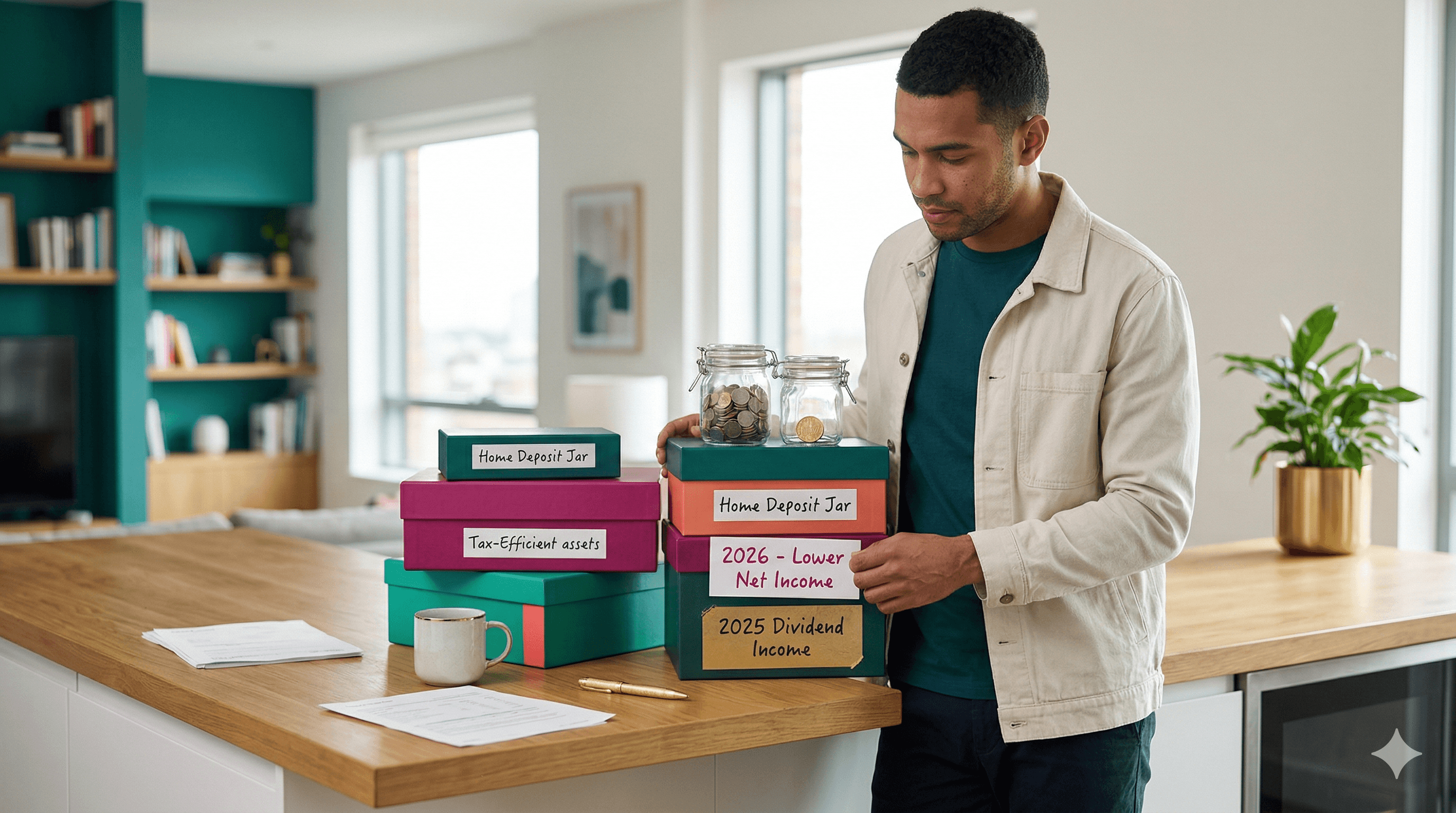
From 6 April 2026, dividend tax rates went up. If you own shares outside an ISA, here's exactly what's changed and what you can do about it.
The government quietly increased dividend tax rates this month, and it's a change that affects anyone holding dividend-paying investments outside a tax-free wrapper. The rises aren't enormous in percentage terms, but they add up, especially if you have a sizeable portfolio generating regular income. Here's what the new rates mean in real money and the straightforward steps to reduce your bill.
What are the new dividend tax rates?
From 6 April 2026, the rates on dividend income above your £500 tax-free allowance are:
Basic-rate taxpayers: 10% (was 8.75%)
Higher-rate taxpayers: 33.75% (was 32.5%)
Additional-rate taxpayers: 39.35% (unchanged)
Your first £500 of dividend income remains tax-free regardless of your tax band. Everything above that is now taxed at the higher rates. Remember, this allowance was £2,000 as recently as 2022/23, then £1,000, then £500. The direction of travel is clear.
The dividend allowance keeps shrinking and the tax rates keep rising. The squeeze on investors holding shares outside ISAs is getting tighter every year.
How much more tax will you actually pay?
Let's run the numbers for a basic-rate taxpayer receiving £3,000 in dividends this year. After deducting the £500 allowance, £2,500 is taxable. At the old rate of 8.75%, the tax bill was £218.75. At the new rate of 10%, it's £250. That's an extra £31.25.
For a higher-rate taxpayer with the same £3,000 in dividends, the taxable amount is the same £2,500. At the old 32.5%, the bill was £812.50. At 33.75%, it's £843.75 - an extra £31.25 again.
Doesn't sound like much? Scale it up. A higher-rate taxpayer with £10,000 in annual dividends now pays £3,206 in dividend tax versus £3,088 at the old rate - an extra £118 per year. Over a decade, that's over £1,000 in additional tax on the same income. And that's before considering that the allowance may shrink further.
Why do dividend tax rates keep going up?
The government has been steadily reducing the tax advantages of holding investments outside ISAs and pensions. The dividend allowance has been cut from £5,000 (when it launched in 2016) to just £500 today. Rate increases compound the effect. The policy direction suggests that the government wants to nudge investors toward tax-free wrappers like ISAs and SIPPs rather than holding shares in taxable accounts.
Whether you agree with that policy or not, the practical response is the same: use your tax-free wrappers first.
How does an ISA protect you from dividend tax?
Investments held inside a Stocks and Shares ISA are completely exempt from dividend tax. It doesn't matter how much dividend income your ISA generates - £500, £5,000, or £50,000 - you pay nothing. The £500 allowance doesn't even come into play because ISA income isn't counted as taxable income at all.
This is the single most effective way to eliminate your dividend tax bill. If you hold dividend-paying shares or funds in a general investment account (GIA) and you haven't used your full ISA allowance, you're paying tax you don't have to pay.
Every dividend earned inside an ISA is yours to keep. Every dividend earned outside one now costs you more than it did last year.
What is "bed and ISA" and should you do it?
Bed and ISA is a strategy where you sell investments held in a taxable account and immediately rebuy them inside your ISA. The name comes from the old "bed and breakfast" strategy of selling and rebuying shares to crystallise gains.
Here's how it works in practice:
Step 1: Sell some of your holdings in your general investment account
Step 2: Transfer the cash into your Stocks and Shares ISA
Step 3: Rebuy the same (or similar) investments inside the ISA
The catch: selling may trigger capital gains tax if your gains exceed the £3,000 annual exemption. But for most people, the long-term savings on dividend tax and future capital gains tax far outweigh a one-off CGT bill. Run the numbers for your specific situation, or speak to a financial adviser if the amounts are significant.
What about accumulation funds?
If you hold funds rather than individual shares, you have a choice between income units (which pay dividends as cash) and accumulation units (which automatically reinvest dividends). With accumulation units, you don't receive cash dividends, so you don't pay dividend tax annually. The reinvested income increases the value of your fund units, and you only pay capital gains tax when you eventually sell.
For investors in taxable accounts who can't (or won't) move everything into an ISA, switching from income to accumulation units is a practical way to defer and potentially reduce your overall tax burden.
Do you need to report the change to HMRC?
If your total dividend income exceeds £500, you must report it on your self-assessment tax return. Most investment platforms provide an annual tax summary showing your dividend income for the year. If you don't normally file a tax return but you've exceeded the allowance, you'll need to register for self-assessment.
The penalty for not reporting can be up to 100% of the unpaid tax in serious cases. Even if you owe a relatively small amount, it's not worth the risk of ignoring it.
Where Mona Fits
Mona's Stocks and Shares ISA completely eliminates dividend tax on your investments. Whether you're moving existing holdings into an ISA wrapper through a bed and ISA strategy, or starting fresh with new contributions, every dividend earned inside Mona's ISA is 100% tax-free. With dividend tax rates rising again this year, the value of that protection has never been clearer.
The Bottom Line
Dividend tax rates have increased from April 2026, and the trend shows no sign of reversing. Basic-rate taxpayers now pay 10% on dividends above £500, and higher-rate taxpayers pay 33.75%. The most effective response is to hold dividend-paying investments inside an ISA, where all income is completely tax-free. If you have investments outside an ISA, consider a bed and ISA transfer this tax year. The longer you wait, the more tax you'll pay unnecessarily.
Shield your dividends from rising tax. Move your investments into Mona's ISA today.
For impartial information and guidance on dividend taxation, visit MoneyHelper.org.uk.